A staircase is more than a route between floors. It is often one of the longest uninterrupted walls in a home—and a natural place for meaningful staircase wall art. The challenge is that a stairwell is viewed while moving, with a changing eye level and a sloping handrail. A simple arrangement that works over a sofa may not feel balanced beside the steps.
This guide explains how to choose framed art for staircases, plan the spacing, and create a calm, coordinated display. Whether your home has a compact straight staircase or a generous landing, start with the wall you actually have rather than copying a gallery-wall template exactly.
1. Choose a layout that follows the staircase
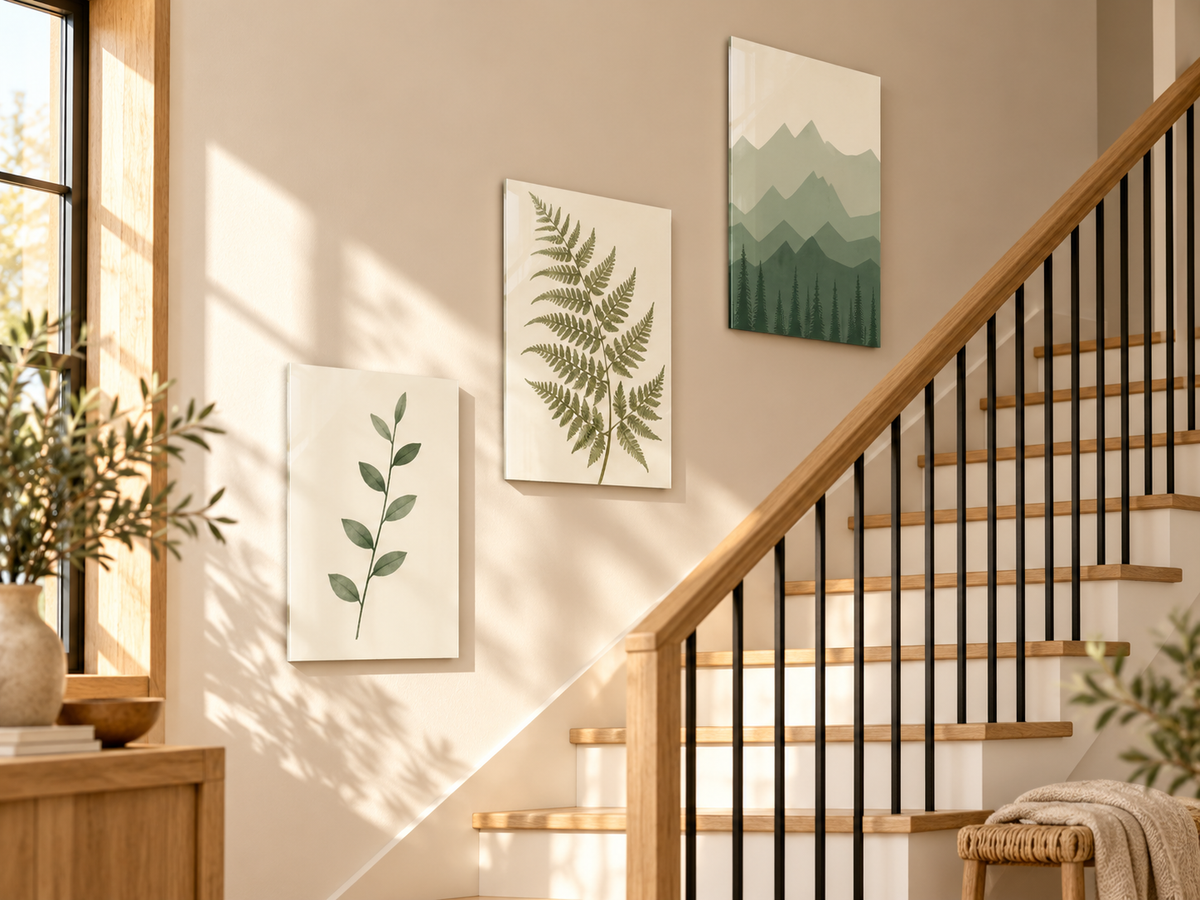
For a long flight of stairs, a series of two, three or more framed prints can follow the rise of the stairway. Keep every frame itself straight and level, but position the centres so the overall arrangement climbs in the same direction as the handrail. This creates a connected visual rhythm without making the artworks appear tilted.
If the wall is short, one larger portrait print at the lower landing may look more considered than a crowded row of small frames. On a tall landing, a single statement piece can serve as an anchor between floors.
2. How high should you hang artwork beside stairs?
Unlike a level hallway, a staircase doesn't have one consistent floor height. Begin by holding a paper outline of a frame against the wall at a comfortable viewing level from the nearby step. Repeat the process at the top and bottom of your proposed arrangement, then mark a gentle diagonal guideline between those reference points.
For a useful first trial, place the centres roughly at adult eye level when standing on the adjacent step, and adjust for your household, railing and ceiling height. There is no universal height that works for every stairway. Leave clearance where people carry bags or furniture, and follow the correct wall-hanging instructions for the weight of the artwork.
3. What sizes work best for a staircase gallery wall?
Smaller and medium portrait-format frames tend to suit narrow stairways because they leave room around the handrail and make the progression easier to follow. Larger pieces can work on wide walls and landings, particularly if only one or two prints are needed.
Before ordering, measure each usable section of wall and the outside dimensions of the complete frame. Use removable paper templates to test positions. A practical arrangement often feels more balanced when frames share a similar height, even if the artwork subjects differ. Check the available dimensions and framing options on each ClassiqueNest product page rather than assuming every design comes in every size.
4. Keep the spacing consistent
Start by testing approximately 3–5 inches between the nearest edges of adjacent frames. It is a visual starting point, not a rule. On steep stairs, the horizontal and vertical offsets may differ, so look at the overall arrangement from both the bottom and top of the flight.
Lay the prints out on the floor before mounting them. This allows you to decide whether a simple two-frame composition, a three-piece stairway arrangement or a longer collection best suits the wall. Paper cut-outs make it easier to correct the spacing before drilling.
5. Three artwork styles that work beautifully on stairs
Calm botanical artwork
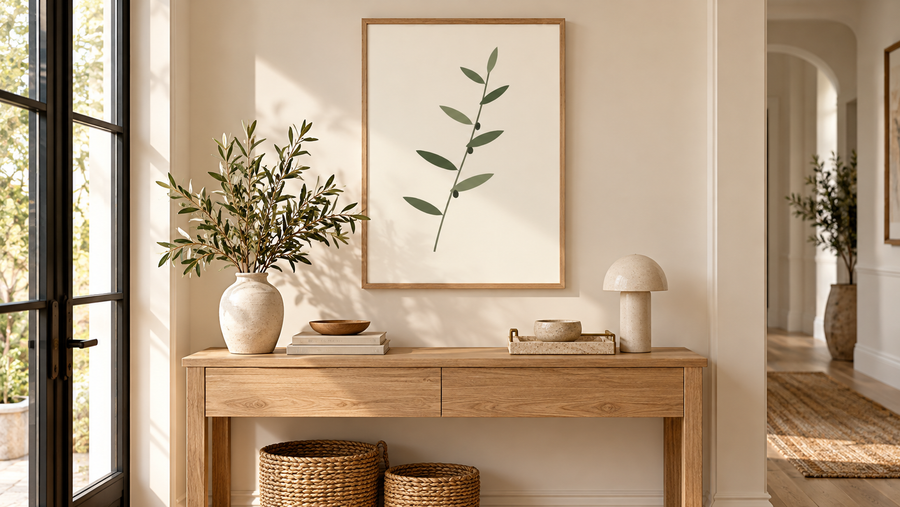
Leaf forms can bring softness to a stairway with pale walls and timber steps. Olive Branch framed wall art uses muted green on a warm background, making it a gentle choice near natural oak or cream-painted walls.
Nature-inspired landscapes
A staircase often connects different rooms, so a landscape can provide an easy visual bridge. Mistbound Mountains introduces sage and layered mountain shapes that work with greenery and understated upholstery.
Warm abstracts
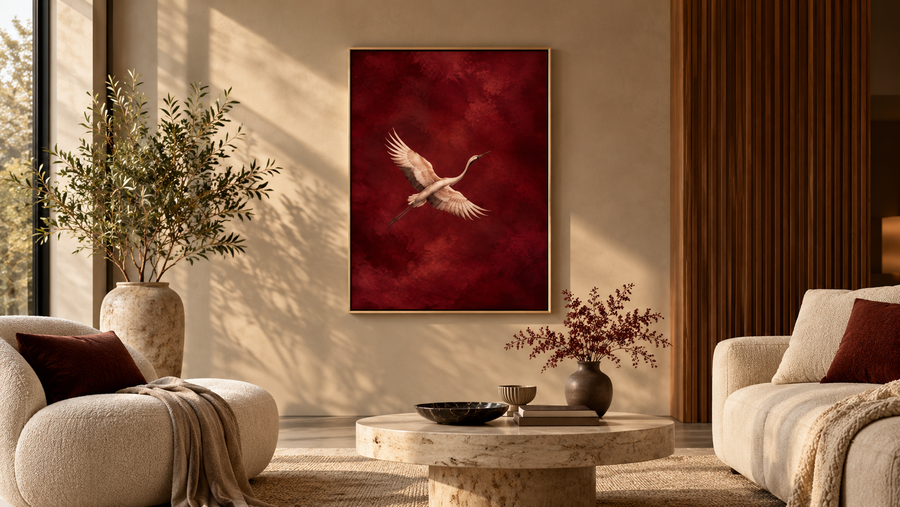
If your home has terracotta, stone or walnut accents, consider Earthtone Stillness. The abstract composition introduces warmth without requiring a strong theme across the whole house. These are individual artworks; combine them only after confirming compatible sizes and frame finishes.
6. Choose frame colours that connect the spaces
Natural wood often works well beside timber stairs, while black frames can pick up the colour of an iron balustrade or dark door hardware. White frames may feel especially quiet on pale walls, but the effect depends on the contrast between frame and paint. A consistent frame finish is the easiest way to make mixed artworks feel intentionally collected.
If you want a more expressive stairway, keep one connecting feature—perhaps sage green in the art, or a repeated wood finish—and let the individual subjects vary.
7. Make the landing a focal point
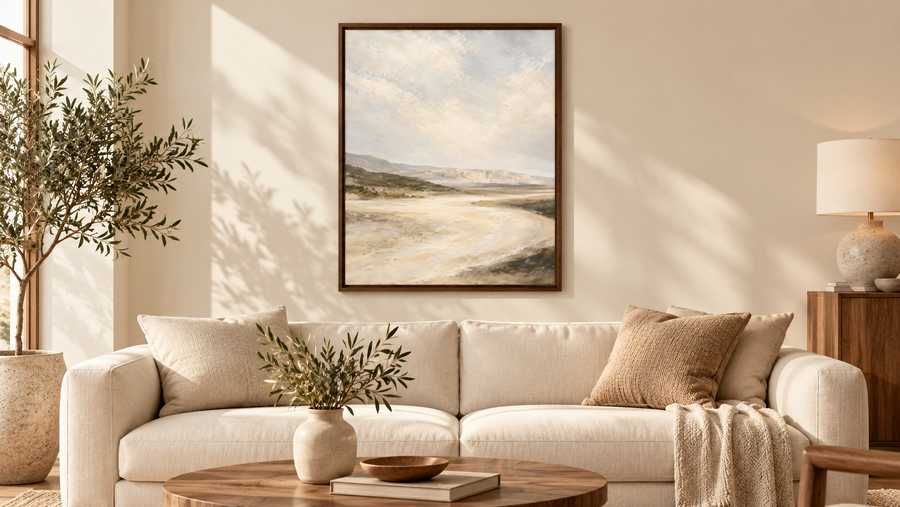
Don't overlook the landing. It may be the only place where someone stops to look closely at the artwork. A single well-proportioned framed print there can work alongside smaller pieces on the flight. For a bright landing, Soft Amber Horizon offers a gentle neutral landscape that complements natural light and a simple side table.
8. Check safety and lighting before hanging
Use fixings suitable for the wall and product weight, and keep frames clear of handrails, door swings and circulation. If a stairwell is particularly tall or difficult to access, professional installation may be sensible. Avoid placing artwork where a person might brush against it while climbing the stairs. Consider reflections from windows and ceiling lights when choosing a finish.
Frequently asked questions
Should staircase pictures follow the slope of the stairs?
The overall grouping can rise with the stairs, but each individual frame should remain level. Consistent visual spacing helps the arrangement feel cohesive.
Are two or three frames enough for a staircase?
Absolutely. Two or three thoughtfully positioned framed prints may suit a smaller stairway better than a crowded gallery wall.
Can I mix botanical and landscape art?
Yes. Repeat a frame tone or muted colour palette to create a common thread without needing identical subjects.
Build a staircase gallery that belongs in your home
Begin with the measurements, then choose the artworks. ClassiqueNest offers made-to-order physical wall art in selectable sizes and frame finishes. Explore Olive Branch, Mistbound Mountains and the other framed pieces above to create a stairway arrangement that feels calm, personal and genuinely considered. The lifestyle imagery in this article is an illustrative styling concept; check individual listings for the exact artwork and format supplied.